This post is more than 18 years old
Politics move quickly and opinions evolve. There's a good chance I no longer hold some of the opinions expressed in the post below
—Mustapha
Killing Sleiman’s Would-be Successor
December 12, 2007 · Mustapha Hamoui
As usual, today’s Beirut bombing carries many layers of symbolism.
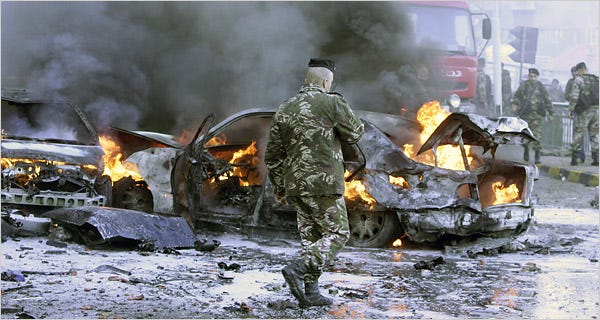
(photo: Mohamed Azakir / Reuters , via the New York Times)
It is too early and information is still coming out of the bombing site, but here is what’s essential to know:
• The target, Brig. General François el Hajj was set to become the Army’s head if Mr. Suleiman was to become President.
• The killing took place in Baabda, where the presidential palace is located.
• The bomb exploded at the same date of Gebran Tueni’s assassination.
• The Army is one of the most trusted institutions in the country and was entrusted with civil peace.
• The bombing happened a day after another bomb that targeted the symbolic area of Ain Al Rimmaneh , where the Lebanese civil war started.
• While a common way to assassinate politicians, this is the first time an Army figure gets bombed this way.
• Brig. General Hajj holds a sensitive security position and his killing points to a serious security breach by non-amateurs
• The victim was one of the main architects of the Army’s assault on the Naher Al Bared camp.
• The bombing took place one day after the Syrian Vice President said that “Syria is the strongest ever in Lebanon today”
Many readings can be drawn from this attack. Was it designed to provoke the Army to over-react to provoke a backlash? Was it targeting civil peace to consolidate Syrian influence ? Was it a revenge killing for Naher Al Bared? Was it a personal threat to Mr. Suleiman?
It’s too early to know, this is why I would like to have your take on this. But let’s consider this provocative fact: Mr. Hage was said to be ideologically close to the opposition. Any takes?
Related Beirut Spring posts:
• I wrote a few weeks ago that the Army leader was very popular in Lebanon • A few months before, I wrote about the Army’s victory in Naher Al Bared and the popular support that entailed from the Lebanese.