This post is more than 10 years old
Politics move quickly and opinions evolve. There's a good chance I no longer hold some of the opinions expressed in the post below
—Mustapha
The Meaning of Beirut Madinati
April 5, 2016 · Mustapha Hamoui
A movement in Beirut promises to be a turning point in the region’s social media revolution
Back in 2012, when things were starting to look grim for Egypt’s revolution, intellectuals like Francis Fukuyama started telling us why they believe revolutions based on social media don’t succeed:
[The Facebook revolutionaries] could organise protests and demonstrations, and act with often reckless courage to challenge the old regime. But they could not go on to rally around a single candidate, and then engage in the slow, dull, grinding work of organising a political party that could contest an election,
As recently as February 2016, Thomas Friedman wrote that Wael Ghonim, one of the online leaders of the Egyptian revolution, believes that social media is very good at destroying things: Bringing down regimes, causing mayhem, breaking down social orders. But it has yet to prove that it could build things and create new orders.
Whenever we look around, it seems that Ghonim’s assessment is correct. Mass social media movements that started with the best of intentions only managed to be “Flashes in the pan”, as Fukuyama puts it. From The Honk Kong demonstrations to #OccupyWallStreet to #BlackLivesMatter, activists driven by genuine injustice managed to cause great commotion, but could not create lasting changes on the ground. (A point that is disputed because it is argued that the awareness of the injustice is an achievement in its own right).
A Glimmer of Hope in Lebanon
In Lebanon we had our own share of flashes in the pan: From the “Revolution against sectarianism” to the #YouStink protests, young men and women organised on social media and demonstrated loudly to drive change into a maddeningly corrupt and incompetent system, but the political class (and the mainstream masses) ignored them without consequence.
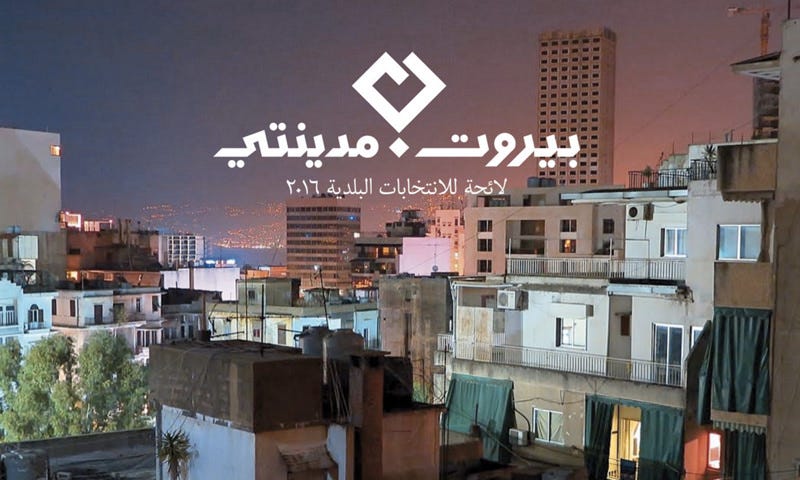
Enter Beirut Madinati, a movement of professionals, academics, intellectuals and activists, who are using social media for a truly revolutionary idea: “the slow, dull, grinding work of organising a political party that could contest an election” as Fukuyama put it. They don’t call themselves a political party, which is fine, considering how toxic the term is. But they are effectively a group of people working towards seeking election to manage a very complex polity: The City of Beirut.
What is refreshing about the movement is its focus on rolling one’s sleeves and building things from within the system. It was based on an insight that the laws in place are already good enough for peaceful change that can make the city of Beirut thrive. The big revolution is the lack of any talk of revolution.
But while the movement is gathering momentum, their success is far from certain. They have immense barriers to overcome, from entrenched moneyed interests to the apparent lack of leadership (even technocracies require the spending of political capital and the occasional hard elbow to rule well).
If you are interested in their success, I strongly recommend that you join their online drive, like their facebook page and spread the word. The future of the Arab spring may be at stake…